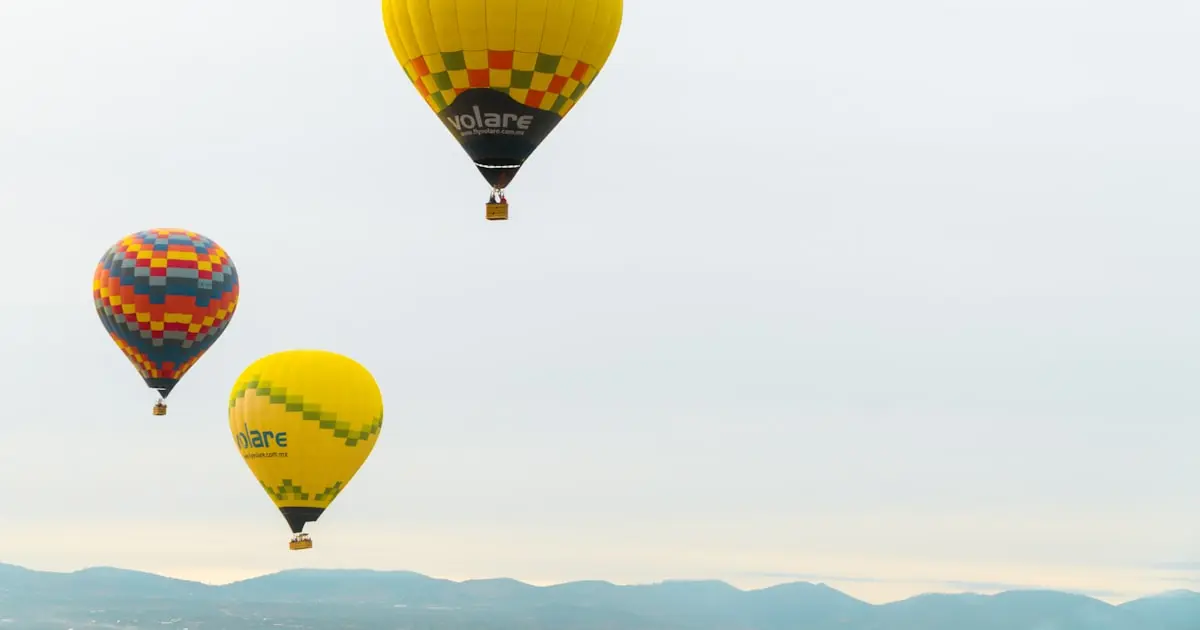
Standing in a wicker basket a thousand feet above the earth, reading the wind, deciding when to burn and when to drift — being a hot air balloon pilot is one of the most unusual and rewarding careers in aviation. It is also one of the most misunderstood. Most people assume you simply learn to pull a lever and point upwards. The reality involves ground school, written examinations, practical flight tests, meteorology, navigation, and hundreds of hours of experience.
This guide covers everything you need to know about becoming a balloon pilot, from the very first training flight to a full-time commercial career.
Do You Actually Need a Licence?
Yes. In every country with an aviation authority, flying a hot air balloon requires a pilot licence. This is not optional, nor is it a formality. Balloons are classified as aircraft, and pilots are subject to the same regulatory framework as fixed-wing and helicopter aviators — albeit with different specific requirements.
The terminology varies by country. In the United States, it is a certificate. In the United Kingdom and Europe, it is a licence. The distinction is bureaucratic, not practical. Either way, you cannot legally carry passengers without one.
Incidentally, a hot air balloon pilot is technically called an "aeronaut," a term dating back to the first flights in 1783. In practice, almost everyone simply says "pilot."
United States: Private Pilot Certificate — Lighter Than Air
The Federal Aviation Administration (FAA) governs balloon pilot certification in the US. The pathway is straightforward but rigorous.
Requirements
- Minimum age: 16 years old
- Medical: No formal FAA medical certificate required (unique among pilot certificates), though you must self-certify that you have no condition that would impair your ability to fly safely
- Flight time: Minimum 10 hours of flight training in free balloons, including 6 hours as pilot in command
- Ground school: Covers aerostatics, meteorology, regulations (FAR Part 91), navigation, and emergency procedures
- Written exam: 60 multiple-choice questions covering all ground-school topics. Passing mark is 70%
- Practical checkride: A flight test with an FAA Designated Pilot Examiner, including oral examination and a real flight demonstrating competency in inflation, launch, altitude control, approach, landing, and emergency procedures
Timeline and Cost
Most students complete their private certificate in 3 to 6 months of part-time training, weather permitting. Balloon training is entirely weather-dependent — you can only fly in calm conditions, typically early morning or late evening — so scheduling can be unpredictable.
Cost ranges from $4,000 to $7,000, covering instructor fees, balloon rental, propane, insurance, examination fees, and study materials. This is significantly less than a fixed-wing private pilot certificate, which typically runs $10,000 to $15,000.
United Kingdom and Europe: PPL(B) — Private Pilot Licence (Balloons)
In the UK (governed by the Civil Aviation Authority) and across EASA member states, the qualification is the Private Pilot Licence for Balloons, or PPL(B).
Requirements
- Minimum age: 16 to begin training, 17 to hold the licence
- Medical: Class 2 medical certificate or a LAPL medical (less stringent)
- Flight time: Minimum 16 hours of flight instruction, including 1 hour of solo flight
- Ground school: Six written examinations covering air law, meteorology, navigation, human factors, flight performance, and balloon-specific systems
- Flight test: General Skills Test (GST) with a CAA examiner, covering all aspects of balloon operation
Timeline and Cost
Training typically takes 4 to 8 months. UK weather makes scheduling challenging — expect cancellations. Budget £3,000 to £5,000 for the full course. Some schools offer intensive programmes that compress training into 2 to 3 months, though you remain dependent on flyable mornings.
What Ground School Actually Covers
Regardless of country, ground school education goes well beyond "pull the burner, go up." Here is what you will study:
Meteorology
This is the single most important subject for a balloon pilot. You will learn to read synoptic charts, understand pressure systems, interpret METARs and TAFs, recognise cloud formations that indicate turbulence or thermal activity, and make go/no-go decisions based on wind speed, visibility, and atmospheric stability. A balloon has no engine and cannot fly against the wind, so understanding wind layers is not academic — it is the primary means of navigation.
Aerostatics and Flight Mechanics
You will study buoyancy, the gas laws (Charles's Law in particular), heat transfer, envelope stress limits, and the physics of how hot air balloons work. This includes understanding why balloons behave differently at various altitudes and temperatures, and what determines the maximum altitude a balloon can reach.
Air Law and Regulations
Airspace classifications, NOTAMs, right-of-way rules, insurance requirements, passenger briefing obligations, and accident reporting procedures. Balloon pilots operate in the same airspace as commercial jets, military aircraft, and drones, and must know the rules that govern all of them.
Navigation
Without an engine, you cannot fly a specific course. But you still need to know where you are, where you are heading, and what obstacles — power lines, restricted airspace, controlled zones — lie in your path. You will learn to use aviation charts, GPS, and visual references to navigate and to select safe landing areas.
From Private to Commercial: Carrying Passengers for Money
A private licence allows you to fly for sport and recreation, but not to charge passengers. To operate commercially, you need a commercial licence — and the requirements step up significantly.
United States: Commercial Pilot Certificate — Lighter Than Air
- Flight time: Minimum 35 hours in balloons, of which 20 must be as pilot in command
- Written exam: More advanced than the private exam
- Practical checkride: More demanding, with greater emphasis on passenger management, emergency scenarios, and decision-making under pressure
United Kingdom: Commercial Pilot Licence (Balloons)
- Flight time: Minimum 50 hours as pilot in command after PPL(B) issue
- Additional exams: Advanced meteorology, flight planning, and operational procedures
- Flight test: More rigorous than the PPL(B) GST
In both systems, the path from private to commercial licence typically takes 1 to 3 years of active flying.
Career Paths for Commercial Balloon Pilots
Once you hold a commercial licence, several career paths open up. The balloon industry is smaller than fixed-wing or helicopter aviation, but it offers something those sectors rarely do: a genuinely enjoyable working life.
Tour Operator Pilot
This is the most common commercial role. You fly passengers on scenic tours — sunrise flights over landscapes like the Atlas Mountains near Marrakech, the fairy chimneys of Cappadocia, or the Serengeti plains. Most operators fly daily during peak season. The work starts before dawn and finishes by mid-morning, leaving afternoons free. It is physically demanding (inflation and pack-up involve heavy lifting) but deeply rewarding. Read reviews from Marrakech passengers to see why pilots love this work.
Festival Pilot
Balloon festivals — Albuquerque, Bristol, Lorraine, Saga — hire experienced pilots to fly displays, participate in competitions, and represent sponsors. Festival work is typically paid per event (£500 to £1,500 plus expenses) and involves a mix of tethered displays, mass ascents, and night glows. It is seasonal and irregular but excellent for building hours and reputation.
Corporate and Advertising Flights
Companies commission special-shape balloons (shaped like their product, logo, or mascot) for marketing campaigns. Pilots who specialise in flying these unusual envelopes command premium rates. You might spend a summer touring Europe flying a 100-foot-tall bottle of shampoo. It sounds absurd. It pays well.
Film and Television
Aerial filming from balloons predates drones by decades, and some directors still prefer the stability and duration a balloon offers. Pilots who work in film need additional skills — precise positioning, tolerance for retakes, and the ability to work within a production schedule.
Flight Instructor
Experienced commercial pilots can become instructors, training the next generation. This requires additional examiner qualifications and a deep understanding of teaching methodology. It is one of the most fulfilling roles in the industry.
A Typical Day for a Commercial Balloon Pilot
Understanding what the job actually looks like, day to day, helps separate romance from reality.
3:30 a.m. — Alarm. Check weather forecasts, surface winds, upper winds, visibility, and cloud base. Call the meteorological office if needed.
4:00 a.m. — Make the go/no-go decision. If flying, call the crew and confirm passengers.
4:30 a.m. — Drive to the launch site. Unload the trailer, lay out the envelope, connect the basket and burner.
5:00 a.m. — Release a pi-ball (a small helium-filled balloon) to check wind direction and speed at different altitudes. Cold-inflate the envelope with a fan, then fire the burner for hot inflation.
5:30 a.m. — Passengers arrive. Deliver the safety briefing, board them into the basket.
5:45 a.m. — Launch. The flight lasts 45 to 75 minutes. During the flight, you manage altitude, read wind layers, monitor fuel, communicate with the chase crew by radio, engage passengers, point out landmarks, and select a landing site.
6:45 a.m. — Land. Passengers disembark. Champagne toast (a tradition dating back to the earliest flights).
7:00 a.m. — Deflate the envelope, pack the basket, load the trailer. This takes 30 to 45 minutes with a good crew.
8:00 a.m. — Drive back to base. Debrief, log the flight, refuel, check equipment.
9:00 a.m. — Done for the day.
It is hard physical work compressed into a few early-morning hours, followed by an afternoon of freedom. Most pilots would not trade it for a desk.
Is This Career Right for You?
Balloon piloting is not a path to wealth — pilot salaries are modest compared to airline captains. It is seasonal in most locations, weather-dependent every single day, and physically demanding. You will wake up before dawn hundreds of times a year. You will cancel flights because of wind and disappoint passengers who have flown halfway around the world for this experience.
But you will also watch the sun rise from a thousand feet above the desert. You will see the faces of people experiencing something they have dreamed about for years. You will master a form of flight that predates powered aviation by over a century. And you will belong to a small, tight-knit community of aviators who genuinely love what they do.
If that sounds like the kind of life you want, start looking for a training school.
Ready to Experience What Balloon Pilots Love About Their Job?
You do not need a licence to experience the magic of a balloon flight. Book a hot air balloon ride in Marrakech and see the Atlas Mountains, palm groves, and the Palmeraie from a perspective that most people only dream about. Our pilots have thousands of flight hours between them and would love to share their passion with you.
Plan your morning — head to our hot air balloon in Marrakech page and reserve directly with the operator.